Diving into the Dynamics 365 model-driven apps and Microsoft’s blending AI into Power Platform, the preview of the Copilot feature is catching the eye. The introduction of Copilot into model-driven apps infuses conversational AI directly into the core of app navigation and data management, significantly enhancing the intuitiveness of daily operations. This exciting feature has been eagerly anticipated, promising to transform the user experience by seamlessly integrating AI assistance at the heart of our core CRM solutions. Here’s a closer look at how this feature can be a significant advantage in your workflow.
What is Copilot in Model-Driven Apps?
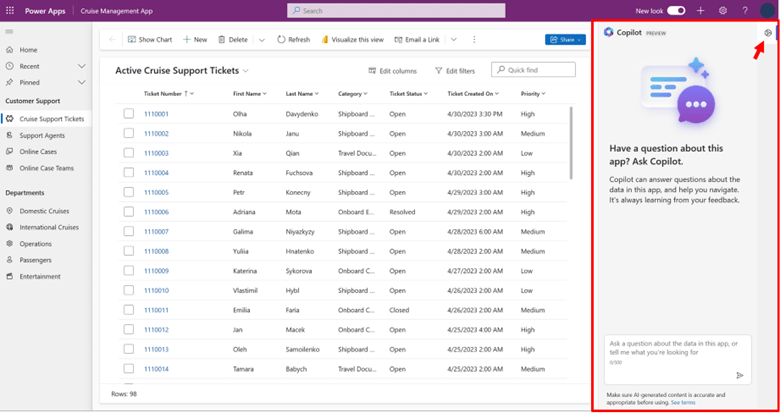
Copilot in model-driven apps is Microsoft’s latest step in blending AI with everyday business processes. It’s designed to assist users by offering insights and navigation through natural language queries, making it a potential advantage for productivity.
Capabilities: Copilot answers queries about specific data tables, guiding users with actionable insights and facilitating smoother workflows. For instance, it can provide summaries of sales data or update records without manual input.
Intended Use: It serves as an AI assistant, providing quick answers to your data-related questions and guiding you through the app’s functionalities without you needing to click through multiple screens.
Setting Up Copilot in Your Dynamics 365 Environment
Getting Copilot up and running involves a few key steps but promises a significant boost to how you interact with your Dynamics 365 environment.
Enable Copilot Feature:
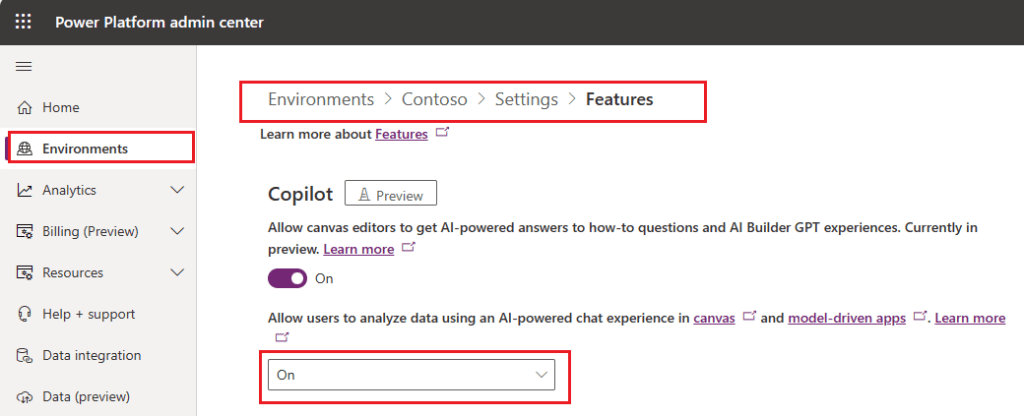
Navigate to the Power Platform admin center and toggle on the Copilot feature under the ‘Product > Features’ menu.
Configuring Your Environment:
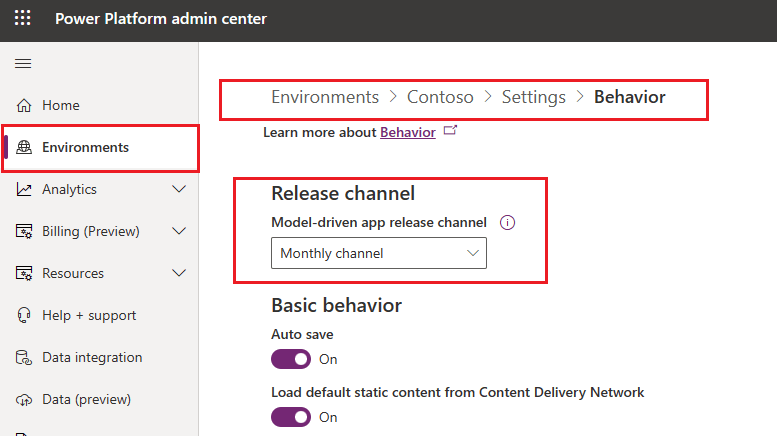
Ensure your system is set to receive the latest updates by selecting the Monthly update channel in your environment settings. This keeps your system in sync with the newest features and improvements.
Leveraging Copilot Effectively
To get the most out of Copilot, here are some practical tips:
Optimize Your Queries: Use simple, direct questions to get the best responses. For example, instead of asking, “How many?”, specify what you want to know, like, “How many new support tickets were opened today?”
Navigate Efficiently: Directly command Copilot to navigate to specific pages within the app, such as, “Take me to the customer feedback form.”
Feedback and Enhancements
Your feedback is crucial for improving Copilot during its preview phase:
Providing Feedback: Easily submit feedback through the Copilot interface in your app. This helps Microsoft refine the features according to user needs.
Adapt Based on Feedback: Microsoft uses your input to continuously enhance Copilot, aiming to better align its functionality with real-world business requirements.
Limitations to Keep in Mind
While Copilot introduces a range of possibilities, there are a few limitations during this preview phase:
Preview Nature: The feature is not finalized for production use and might have limited functionality.
Geographical and Language Availability: Currently, it’s only available in the US region and requires the English language setting.
Conclusion
The Copilot feature in Dynamics 365 model-driven apps is paving the way for a more interactive and efficient approach to managing business applications. By integrating this AI-driven assistant into your daily routine, you can enhance how you interact with data, streamline operations, and perhaps most importantly, save time. As you explore this new tool, remember that your insights and usage will help shape its future development, making it even more tailored to meet complex business needs.
For more details on setting up and using Copilot in model-driven apps, check out the official Microsoft documentation:
In my previous blog post, I aimed to offer a comprehensive guide on the overview of Microsoft Copilot, including paths to achieving success by making the most out of it. I encourage you to take a moment to read it and gain a broader understanding of the landscape in which Copilot for Microsoft 365 operates. This background will provide valuable context as we dive deeper into its capabilities and how it can transform your work within the Microsoft ecosystem.
In this blog, we’ll take a closer look at Copilot for Microsoft 365, exploring its features, how to get started, practical use cases, user experiences, potential challenges, licensing requirements, and what the future may hold. Join me as we navigate through the ins and outs of integrating Copilot into our daily routines, enhancing our productivity with this powerful tool. Whether you’re a seasoned pro or new to Microsoft 365, there’s something here for everyone as we delve into how Copilot can transform the way we work.
The Integral Role of Microsoft 365 in Our Daily Lives
Starting from ourselves, when we look around, it’s clear to see that Microsoft 365 tools have become an integral part of our day-to-day lives, spanning both personal and professional realms. Whether it’s crafting or editing text-based content in Microsoft Word, the go-to application, or presenting structured information visually through PowerPoint, these tools have cemented their place in our daily routines. Microsoft Excel, renowned for its balance of complexity and simplicity in calculations, computations, reporting, data manipulation, and visualization, has been a staple for many years. There’s no question that Microsoft Outlook and Teams sit at the heart of our daily communication and collaboration, especially in our professional lives. With the advent of cloud services becoming a standard in the past decade, all these tools have now been combined and rebranded under Microsoft 365 by Microsoft, offering an unmatched capability of extension to other technologies on a larger scale. This is where the golden opportunity to adopt Copilot alongside our familiar companions arises, for both personal and professional use, to significantly boost our productivity. Within the Microsoft productivity ecosystem, these tools primarily used to rely on the user’s own efforts and skills to produce high-quality and rich content. Copilot, with its assistive nature, unveils incredible possibilities to elevate human intelligence by saving a tremendous amount of time and effort on any tedious task.
Practical Use Cases
Below,are some practical use cases for Copilot across Microsoft Word, PowerPoint, Excel, Outlook, and Teams, showcasing how Copilot can transform our daily workflows and enhance our digital experiences.
Microsoft Word:
Content Creation & Editing: Use Copilot to generate draft documents or blog posts based on an outline or topic. It can also suggest improvements to your writing, such as grammar corrections, style enhancements, and more concise language.
PowerPoint:
Presentation Design & Refinement: Copilot can help design compelling presentations by suggesting layouts, themes, and even generating entire slide decks from a summary. It can also recommend visual enhancements and data visualization techniques to better convey your message.
Excel:
Data Analysis & Visualization: Leverage Copilot to analyze complex datasets, perform predictive analysis, and automatically generate charts and graphs. It can help identify trends, summarize data insights, and even suggest actions based on the analysis.
Outlook:
Email Drafting & Management: Use Copilot to draft emails by providing a brief summary of what you intend to communicate. It can suggest responses to incoming emails, help manage your inbox by highlighting important messages, and schedule meetings based on email conversations.
Teams:
Meeting Summarization & Action Item Tracking: Copilot can provide real-time meeting transcriptions in Teams, summarize key discussion points, and track action items. It enhances collaboration by organizing conversation threads and extracting unresolved questions or decisions needed.
Understanding Copilot for Microsoft 365 with Visual Architecture Insights
I’m sharing two insightful visuals from Microsoft documentation below, which will save us countless words in explaining the mechanics behind the scenes.
In the diagram below, which I’ve enhanced with three layers from my own perspective, you’ll get a comprehensive view of the logical architecture of the solution operating behind the scenes.
The Frontend Layer, in my own words, comprises the Microsoft 365 applications that users engage with daily for productivity and collaboration. This suite of Microsoft 365 applications will continue to serve as the interface to harness the capabilities offered by Copilot for Microsoft 365. Users will experience Copilot features as seamlessly integrated enhancements within the tools they are accustomed to. Imagine an add-on within Outlook that appears in or above your email previews with actionable commands, or a side pane in your Word, Excel, or PowerPoint documents facilitated by an add-on that empowers you to generate content or analyze data within the current context. Within Microsoft Teams, Copilot’s potential extends even further, assisting in organizing conversational content into summaries/notes, identifying unresolved questions from discussions, and more.
The Service Layer, from my perspective, acts as a crucial bridge connecting organizational data with user experience, seamlessly integrating complex logical components for the computations of Copilot technology. The true strength of Copilot for Microsoft 365 lies in its ability to unravel complexity through the use of Microsoft Graph services and components, leveraging your existing organizational data and services to its advantage.
The Data Layer, forming the backbone of the entire framework, is pivotal in deriving the most meaningful and contextual benefits from GenAI. By accessing data across personal, team, and organizational levels, Copilot is equipped to process and produce content from various sources tailored to your specific use case. Furthermore, by leveraging the existing Microsoft 365 infrastructure and security capabilities, Copilot ensures that the data involved in your workflows adheres to the stringent security and compliance policies and requirements of your business.
The short video below offers an excellent depiction of the data flow and the components involved in the Microsoft 365 Copilot system from start to finish. As a huge fan of visualizations, I highly recommend taking just under two minutes to watch it. I have no doubt that it will provide memorable insights that you’ll recall whenever you utilize Copilot in your own projects.
Getting Started with Copilot for Microsoft 365
Activating Copilot for Microsoft 365 involves several steps to ensure you have full access to its range of features across different applications like Word, Excel, PowerPoint, Outlook, and Teams. Here’s a step-by-step guide to get you started:
Step 1: Verify Your Subscription
Ensure you have an active Microsoft 365 subscription that includes access to Copilot features. Copilot may require a specific tier of subscription, so check Microsoft’s official documentation for eligibility.
Step 2: Update Your Microsoft 365 Suite
Open any Microsoft 365 application (Word, Excel, etc.).
Go to File > Account (or Office Account in some applications).
Under Product Information, choose Update Options > Update Now to ensure your suite is up to the latest version.
Step 3: Sign in to Your Microsoft Account
If not already signed in, enter your Microsoft 365 account credentials to log in. Copilot features are linked to your subscription, so this step is crucial. Microsoft Entra account (i.e. Azure Active Directory (Azure AD)) is required to authenticate and use Copilot features.
Step 4: Access Copilot Settings
In the application of choice (e.g., Word), go to the File menu and select Options.
Look for a tab or section named Copilot or similar. The exact location might vary based on the app and the current updates.
Step 5: Activate Copilot Features
Within the Copilot settings, toggle the features you wish to enable. There might be general settings to activate Copilot or more specific options tailored to each application’s capabilities.
Step 6: Start Using Copilot
Begin your task, such as drafting an email in Outlook or creating a document in Word.
Invoke Copilot by using the built-in commands, suggestions, or the Copilot pane, depending on the application. Instructions or prompts within the app can guide you on how to interact with Copilot for specific tasks.
Step 7: Customize Your Experience
As you use Copilot, adjust its settings and preferences to better suit your workflow. This might include customizing suggestions, setting up specific commands, or tailoring how and when Copilot interacts with your content.
Additional Tips:
Stay Updated: Regularly check for updates to Microsoft 365 and Copilot to access new features and improvements.
Explore Tutorials and Resources: Microsoft offers tutorials and guides on leveraging Copilot in Microsoft 365. These can be invaluable for understanding advanced functionalities.
By following these steps, you should be able to successfully access and activate Copilot across your Microsoft 365 applications, enhancing your productivity and making the most of AI-powered assistance.
Conclusion
As we wrap up this deep dive into Copilot for Microsoft 365, it’s clear that this tool is not just about enhancing productivity; it’s about transforming how we interact with technology to create, collaborate, and communicate. From drafting documents in Word to analyzing data in Excel and streamlining communications in Outlook and Teams, Copilot stands as a testament to the future of work.
I encourage you to take these insights, explore the capabilities of Copilot for yourself, and start integrating these advanced tools into your daily routines. Dive in, explore, and don’t hesitate to share your journey and successes, your feedback and stories could inspire others.
Stay tuned for more posts in this series, where we’ll explore other Copilot versions, each designed to revolutionize different facets of our digital workflows and creativity.
In the ever-evolving landscape of technology, Microsoft has once again positioned itself at the forefront of innovation with the introduction of Microsoft Copilot. This transformative tool is designed to redefine how professionals across various industries interact with digital content, data analysis, and computational tasks. This blog post aims to provide a comprehensive overview of Microsoft Copilot, including its functionalities, example use cases, and the types of Copilots available.
What is Copilot?
Microsoft Copilot is an AI-powered assistant designed to make your life easier, whether you’re a developer, writer, or creative thinker. Think of it as your trusty sidekick—an intelligent companion that assists you in various tasks.
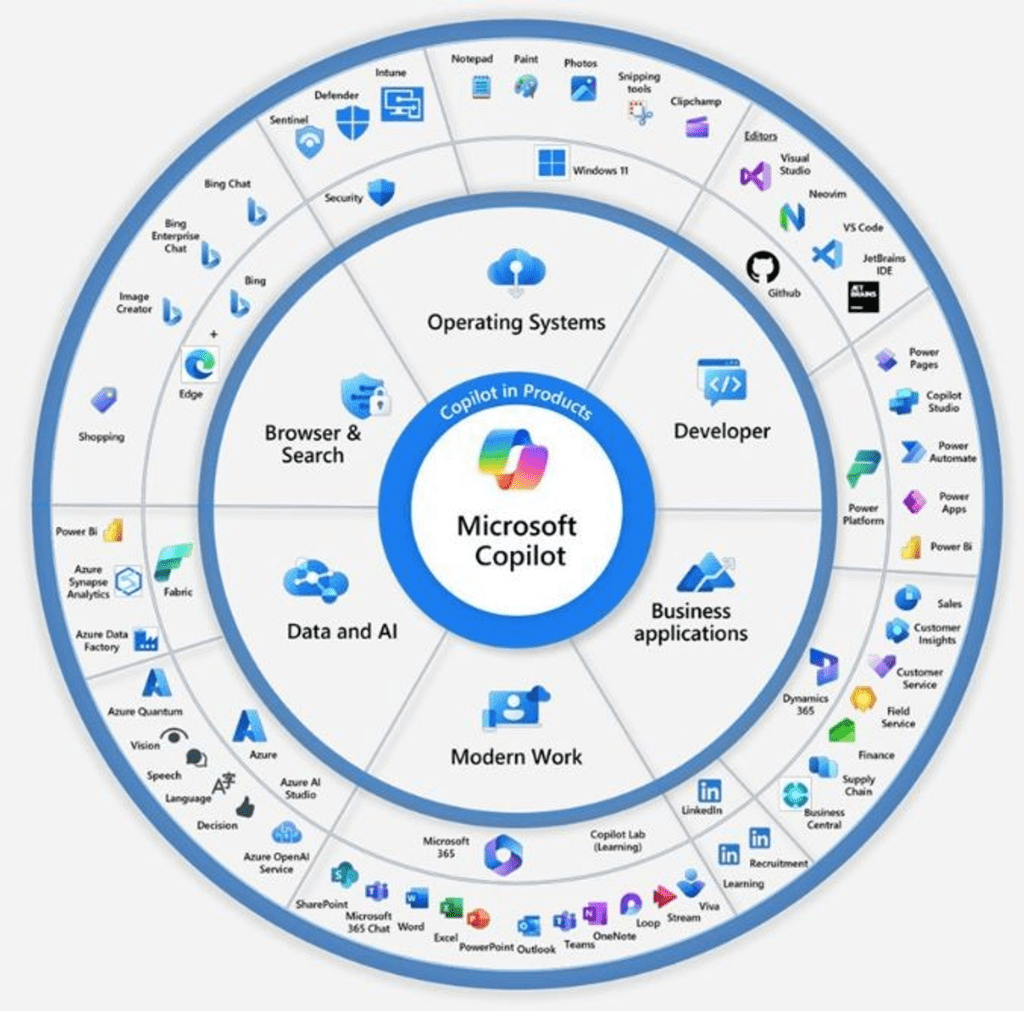
I really like this image that shows how central Microsoft Copilot is for helping everyone get more done, from everyday tasks to big work projects. It’s like having a helper for your own web searches and making those boring tasks quicker to finish, while also being a powerhouse for tech experts who need a boost in their complex work. Plus, when it’s used in businesses, it acts like the perfect partner, making sure companies get the most out of their investments by pushing the limits of what they can achieve in terms of productivity and success.
This picture perfectly captures the big picture of what Microsoft Copilot does. It’s not just a tool; it’s like a right-hand man for anyone who uses it, making work and personal tasks a lot smoother and pushing us to do our best, no matter the job.
3 paths on your Copilot Journey
Path 1: Adopt Copilot Assistants offered by Microsoft
Microsoft Copilot extends its capabilities across a variety of platforms, ensuring that no matter your profession or need, there’s a Copilot designed for you. If you identify a fit with built-in capabilities of any offered Copilots by Microsoft, that could be your shortest journey for productivity and success.
Let’s explore the array of Copilot products available, highlighting their key features and potential applications:
Dynamics 365 Copilot
Description: Provides AI-driven insights within Dynamics 365 to support better business decisions.
Top Features: Summarizes customer interactions, forecasts sales trends, and automates repetitive tasks.
Use Cases: Enhancing CRM effectiveness, sales prediction accuracy, and operational efficiencies.
Power Platform Copilot
Description: Assists in creating custom apps, automating workflows, and analyzing data with ease.
Top Features: Offers design suggestions, auto-generates code for automation, and delivers insightful data analysis.
Use Cases: Building custom applications, streamlining complex workflows, and enabling informed decision-making.
Copilot for Azure
Description: Aids Azure users in managing and optimizing their cloud environments with the power of AI.
Top Features: Automated cloud resource management, AI-driven cost optimization suggestions, and security compliance assistance.
Use Cases: Streamlining cloud operations, reducing costs through intelligent resource allocation, and ensuring security standards are met efficiently.
Copilot for Service
Description: Enhances customer service experiences by providing AI-powered support and insights.
Top Features: Real-time customer query resolution suggestions, sentiment analysis to gauge customer satisfaction, and automated response drafting for common inquiries.
Use Cases: Improving response times and quality in customer service, understanding customer needs better through sentiment analysis, and streamlining the customer support workflow.
Microsoft 365 Copilot
Description: Seamlessly integrates with Microsoft 365 applications to boost productivity across Word, Excel, PowerPoint, and more.
Top Features: Aids in content creation, simplifies data analysis, and guides presentation design.
Use Cases: Crafting documents, analyzing and visualizing data, and creating engaging presentations efficiently.
Copilot for Windows
Description: Integrates deeply with the Windows operating system to provide assistance across applications and tasks.
Top Features: Contextual assistance, task automation, and personalized recommendations.
Use Cases: Simplifying daily tasks, enhancing productivity, and personalizing the Windows experience.
Viva Sales Copilot
Description: Enhances the sales experience by integrating CRM platforms with Outlook and Teams.
Top Features: Automatically fills in CRM data, crafts personalized emails, and delivers actionable insights from customer data.
Use Cases: Streamlining sales workflows, improving customer interactions, and automating data entry.
GitHub Copilot
Description: Supports developers by suggesting code and functions in real-time, enhancing coding workflows.
Top Features: Context-aware code suggestions, multi-language support, and adaptive learning from user coding patterns.
Use Cases: Speeding up software development, improving code quality, and facilitating learning of new languages or frameworks.
Copilot Studio
Description: A creative sandbox that allows users to craft, simulate, and test AI models and experiences.
Top Features: Intuitive design interface, real-time AI model testing, and collaboration tools.
Use Cases: Designing AI-driven applications, prototyping new ideas, and collaborating on innovative projects.
Each Copilot product is thoughtfully designed to address specific needs, whether it’s managing sales data, developing software, creating content, or enhancing the Windows experience. With these tools at your disposal, you’re well-equipped to navigate the challenges of the modern digital landscape with greater ease and efficiency.
Path 2: Extend Copilots
Just like with many other Microsoft platforms and tools, Copilot also offers the flexibility to be customized for unique experiences. Sometimes, you might find that the standard Copilot setup doesn’t quite hit the mark for your specific needs, possibly because it doesn’t have access to certain data or services you rely on. This is where Microsoft’s extension capabilities come into play, opening up a world of possibilities for developers or ISVs to create plugins or connectors. These custom solutions allow Copilot to seamlessly integrate with external APIs or data sources, bridging any gaps.
In enterprise environments, where integrating new solutions often involves navigating through a maze of constraints or requires additional engineering efforts, the ability to extend Copilot becomes invaluable. By tapping into these extension capabilities, you can significantly enhance the core functionalities of Copilot assistants. This means you can tailor them to work perfectly with your own APIs and data, crafting a solution that’s perfectly aligned with your specific user journeys. It’s a way to not just use Copilot, but to truly make it your own, ensuring it delivers exactly what you need, right where you need it.
Thanks to its extensive extendibility through plugins, Microsoft Graph connectors, and message extensions. Here’s a closer look at how extending its capabilities can tailor it more closely to your specific requirements:
Plugins: These act as bridges, enabling Copilot to directly fetch and utilize external data, from the latest news to project-specific details. For those looking to integrate data from outside applications, Power Platform connectors are a particularly useful type of plugin, allowing for the creation of custom apps and workflows that feed directly into Copilot for Microsoft 365 and Power Platform.
Microsoft Graph connectors: These connectors play a crucial role in bringing external content into the Microsoft 365 ecosystem, making it accessible through Copilot. They’re all about connecting, organizing, and managing external data, ensuring it’s readily available where and when you need it.
Message extensions: Focused on Microsoft Teams, these extensions enable a more interactive experience by allowing users to access and share external service information directly within their chat conversations. It’s a practical way to extend Copilot’s functionality into the collaborative space of Teams.
Microsoft Copilot Studio: Adding to the suite of extensions is Copilot Studio, a low-code environment designed for building solutions that leverage your business data. It simplifies the integration of custom data into Copilot for Microsoft 365, enabling non-technical users to add logic and data connections through an intuitive drag-and-drop interface.
Each of these extensions serves to enhance Copilot’s utility, making it not just a tool but a comprehensive assistant that can be customized to fit the intricacies of your work environment. By integrating these extensions, you can ensure that Copilot aligns with your specific data needs and workflows
Path 3: Build your own Copilot
In the realm of digital assistance, Microsoft Copilot stands out not just for its ready-to-use capabilities but also for the possibility it offers to craft a Copilot that’s uniquely yours. Using a blend of Azure OpenAI, Cognitive Search, Microsoft Copilot Studio, and other Microsoft Cloud technologies, you can develop a conversational AI that speaks directly to the needs of your users, integrating seamlessly with your company’s data and documents. Imagine creating a Copilot that offers a chat interface for quickly accessing help desk tickets or knowledge base articles, simplifying the search process with a conversational UI that cuts through the clutter.
Building Blocks for a Custom Copilot
Conversational AI with Azure OpenAI and Cognitive Search: This setup enables the creation of an advanced platform where users can interact with company data and documents in natural language. It’s about making information retrieval and task completion as intuitive as speaking.
Solution Accelerators and Samples: To jumpstart your custom Copilot development, Microsoft provides accelerators and samples. These resources are designed to guide you through integrating your data with Azure OpenAI models, embedding conversational AI into your applications, and more.
Microsoft Copilot Studio: Beyond extending the capabilities of Copilot for Microsoft 365, Copilot Studio offers a low-code environment for building your own AI-driven chatbots and GPTs. Whether it’s for simple queries or complex problem-solving, Copilot Studio makes the creation process accessible, with the added benefit of integration across digital platforms like websites, mobile apps, and even Microsoft Teams.
Envisioning Your Custom Copilot
Creating your own Copilot is more than just a technical project; it’s an opportunity to enhance how your organization interacts with data, simplifies tasks, and communicates both internally and externally. With tools like Azure OpenAI, Cognitive Search, and Copilot Studio, you’re equipped to build an AI that not only understands your business but also enhances your digital ecosystem with intuitive, conversational interactions.
Conclusion
Microsoft Copilot is here to shake up the way we work, serving up a variety of AI-powered tools that promise to make our professional lives easier and more productive. Whether it’s diving into the wealth of pre-built assistants, tweaking things with plugins for that perfect fit, or crafting your very own Copilot with the help of Azure OpenAI, there’s something for everyone looking to up their game. It’s about making work feel less like work and more like achieving with a trusted friend by your side. And this is just the beginning! I’m excited to keep exploring and sharing insights on Copilot and other revolutionary tools. Stay tuned for more posts where we’ll continue to uncover the future of work together, making it smarter, faster, and a whole lot more fun.
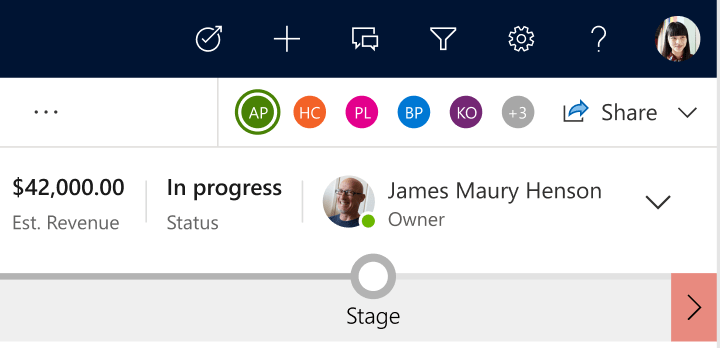
With the release of the 2023 wave 1 update, Dynamics 365 / Power Platform users will have access to a new feature that allows them to see which colleagues are viewing the same record as them.
This new feature is a significant addition, as it enables users to collaborate more effectively and streamline their workflows.
To use this new feature, users can simply navigate to the record they are working on and look for the section allocated in the top right corner of the screen.
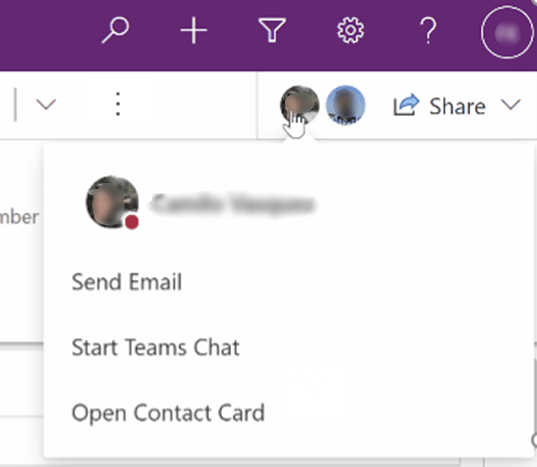
Here, you will see a list of all the colleagues who are currently viewing the same record as you. You can click on a colleague’s name to send them a message or start a chat with them.
Key benefits
Improved Collaboration: With the ability to see which colleagues are viewing the same record as you, it becomes much easier to collaborate around contextual business data and processes. You can quickly identify who else is working on the same record, and you can reach out to them for collaboration. This feature has the potential to avoid boundaries and silos across different user groups working on the same record and it will encourage people to reach out to eachother for sharing more information.
Reduced Duplication of Effort: When multiple colleagues are working on the same record, there is a risk of duplication of effort. However, by viewing who else is working on the same record, you can avoid this problem. You can communicate with your colleagues and coordinate your efforts to ensure that you are all working together efficiently.
Increased Productivity: When you know who else is working on a record, you can make more informed decisions about when to take action. For example, if you see that a colleague is already working on a record, you can hold off on making any changes until they are finished. This can help avoid conflicts and increase overall productivity.
Let’s consider an example use case;
Assume you are a Salesperson preparing for your next client meeting to present your pitch for a cross-sell product for your client.
While you are on the way to your client meeting, when you navigate to Client record in Dynamics 365 / Power Platform to review latest updates on opportunites and activites, you notice a Customer Service Representative is viewing the record at the same time.
You can quickly initiate a teams chat with the person to check if there is any service related matters you should be aware of before meeting the client. Consider a scenario where a customer service case has been recently raised, and the client has a negative sentiment towards the product you plan to pitch for a cross-sell. This simple visibility and collaboration opportunity can provide you opportunity to re-plan your engagement in most efficient way to make your presentation/meeting a success.
Key technical/functional highlights
You can benefit from this feature on all entities/tables including custom entities.
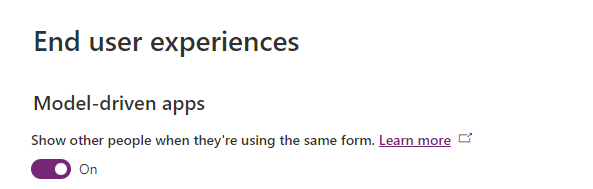
You can enable/disable this feature on your environment as needed. There is a setting under Environments > Settings > Collaboration which can be controlled by administrators in Power Platform Admin Center. As per documentation from Microsoft for 2023 Wave 1 updates, this will be enabled by default as part of the release.
This feature relies on Azure Fluid Relay Service (FRS) and you can check availability of the service on following link
Over many years of experience I had in Dynamics platform I am familiar with Microsoft’s continous and frequent updates on user interface and user experience. Although the main focus has always been to keep the platform up to date with trends of technology, I should be honest to admit that it was always challenging to maintain user adoption and technical alignment on complex enterprise solutions/workflows.
With the release of the 2023 Wave 1 update, Microsoft has introduced a new look and feel for model-driven apps. This new look comes with updated user experience on 3 main pillars; new styling on forms and views, new “Fluent-based controls”, and new Power Apps grid. In this blog post, we will discuss those new changes and what they mean for Dynamics 365 users as well as how to configure and control them in your environments.
New styling on forms and views
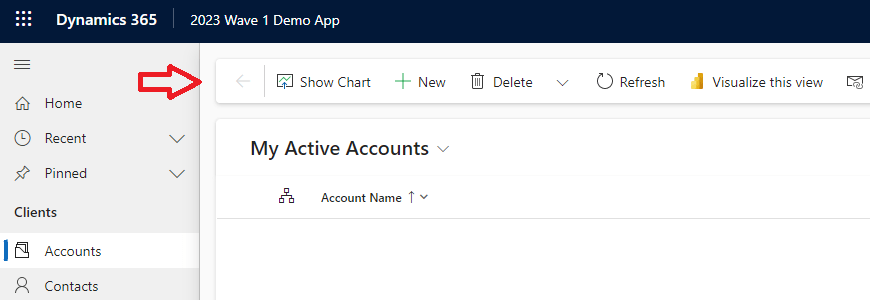
New command bar experience provides more consistent and familiar look and feel as in other Microsoft apps. Elevated separate section makes it more visible on top of the forms and view as a container of available actions for the context.
Form page with new look also follows the same experience to have elevated section containers with rounded rectangles.
Header section is pinned on top of the form as a frozen pane. This is one of the key improvements that users have been asking for a while. Especially for the forms which contain a business process flow along with multiple sections of controls to scroll to the bottom, it would provide more efficient and productive experience for naviagation within the form.
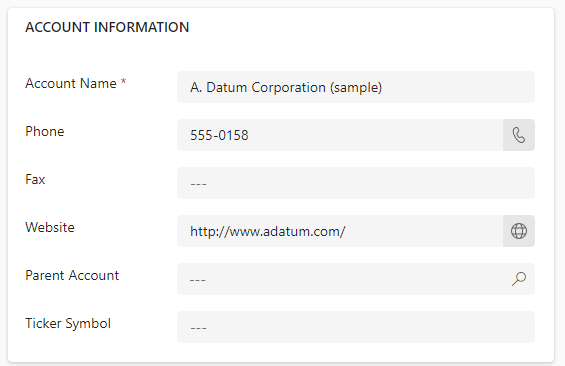
Here is an example of how an account form appears in new look
Fluent based controls
The big step forward in this update is introduction of Fluent based controls on forms. While providing a consistent and standard user experience, this strategic technical change indicates a direction on what future enhancements we can expect on form controls.
Text input, action input, lookup, and check box controls are already moved to Fluent components and more to follow in upcoming updates. Considering the same control framework is becoming the new standard on Power Apps, Canvas Apps etc. it is important to get familiar with Fluent UI for a developer/designer.
New Power Apps grid control
Besides all valuable information about Power Apps grid control, the key statement to take away from Microsoft release documentation for 2023 Wave 1 update is “This control will eventually replace all read-only and editable grids in model-driven apps”.
Although Microsoft has left it for makers/administrators to decide and control enabling Power Apps grid control as of now, I would strongly recommend to adapt this grid control into your model-driven apps as early as possible.
Key highlights/features of the control;
➕ infinite scrolling for a modern data browsing experience
➕ supported in sub-grids and associated grids in main forms
➕ supports inline editing
➖ not yet supported in dashboards
Key notes
The new look is only supported for Web interface to start with and is not available and not supported on mobile or outlook apps yet.
Updates come toggled off by default but can be enabled for any model driven app by app makers or administrators.
Conclusion
The new look and feel of model-driven apps on Dynamics 365 introduced in the 2023 Wave 1 update provides users with yet another noticably different experience. The enhanced look, increased customization options, and improved performance will make it easier for users to interact with the system and complete tasks more efficiently.
The new update is a significant step forward to align the platform with other apps via leveraging Fluent control framework and experience. It will be exciting to see how the adoption and reaction will be from the businesses and what future technical enhancements and flexibilities will Fluent controls offer.




 kursat topcu